Most California homeowners spend $1,800 to $4,000 to insulate a crawl space in 2026. Smaller crawl spaces start around $1,000. Larger jobs that require removing old, fallen, or rodent-damaged insulation first can reach $7,000.
But there is a decision that matters more than the price, and getting it wrong is why so many crawl space insulation jobs fail within a few years: do you insulate the subfloor above, or the walls around?
Those are two different projects with two different price tags, and the right answer depends on something most homeowners have never been asked about.
Cost by Crawl Space Size
Fiberglass batts installed against the subfloor in a vented crawl space, the most common California scenario:
| Crawl Space Size | Typical Installed Cost |
| 800 sq ft | $1,000 – $2,200 |
| 1,000 sq ft | $1,200 – $2,700 |
| 1,500 sq ft | $1,800 – $4,000 |
| 2,000 sq ft | $2,400 – $5,300 |
| 2,500 sq ft | $3,000 – $6,600 |
Cost by Material
| Material | Installed Cost per Sq Ft | Where It Goes |
| Fiberglass batts | $1.20 – $2.50 | Subfloor, between joists |
| Mineral wool batts | $1.80 – $3.20 | Subfloor, moisture-prone areas |
| Rigid foam board | $2.00 – $4.00 | Crawl space walls |
| Closed-cell spray foam | $2.50 – $5.00 | Subfloor or walls, seals as it insulates |
| Old insulation removal | $1.00 – $2.00 | Add-on |
Fiberglass batts handle the large majority of California crawl space work. Closed-cell spray foam performs better and air seals in one step, but at roughly double the cost it needs a specific reason.
Subfloor or Walls? This Is the Decision That Matters
The rule is simple once someone explains it, and almost nobody does:
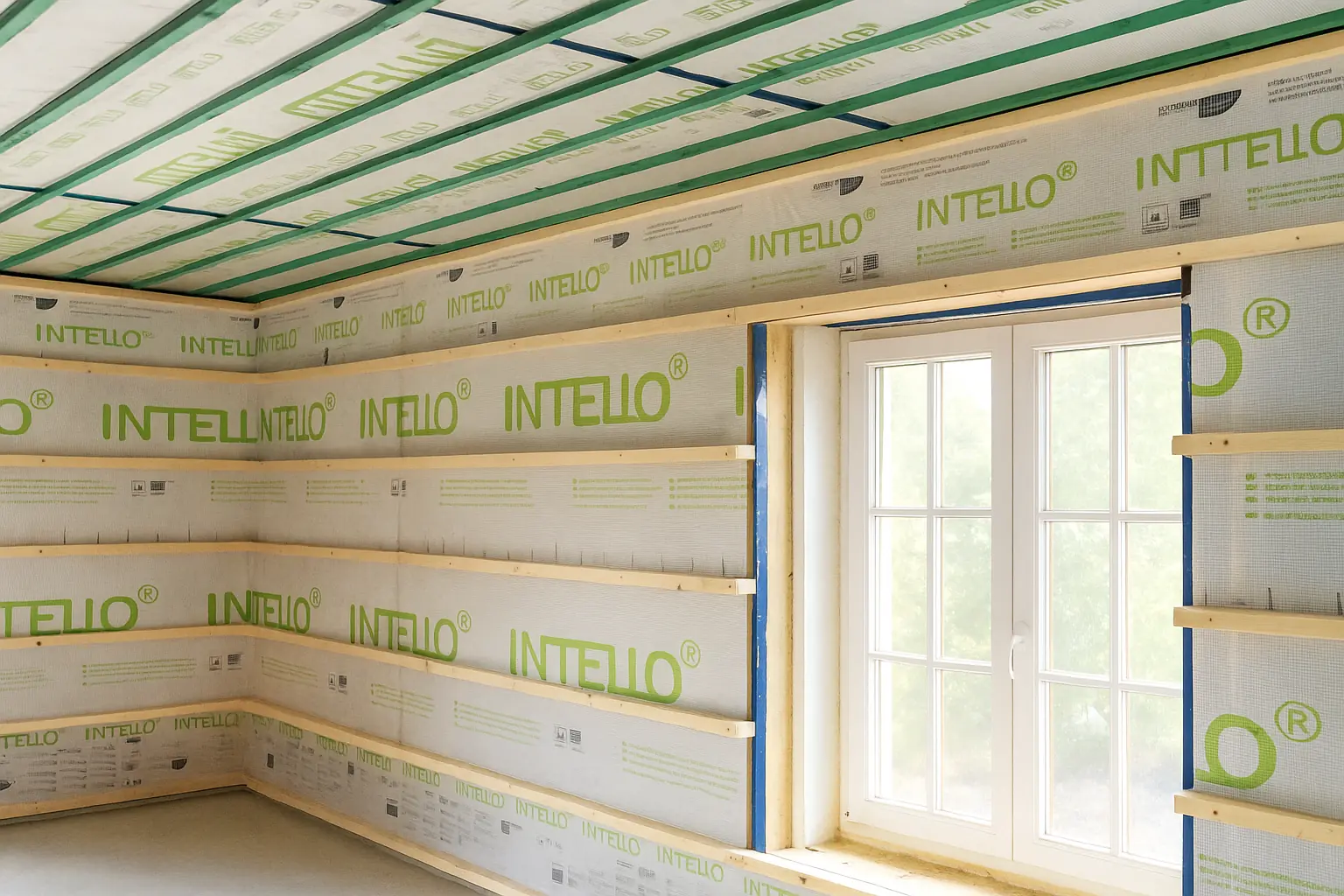
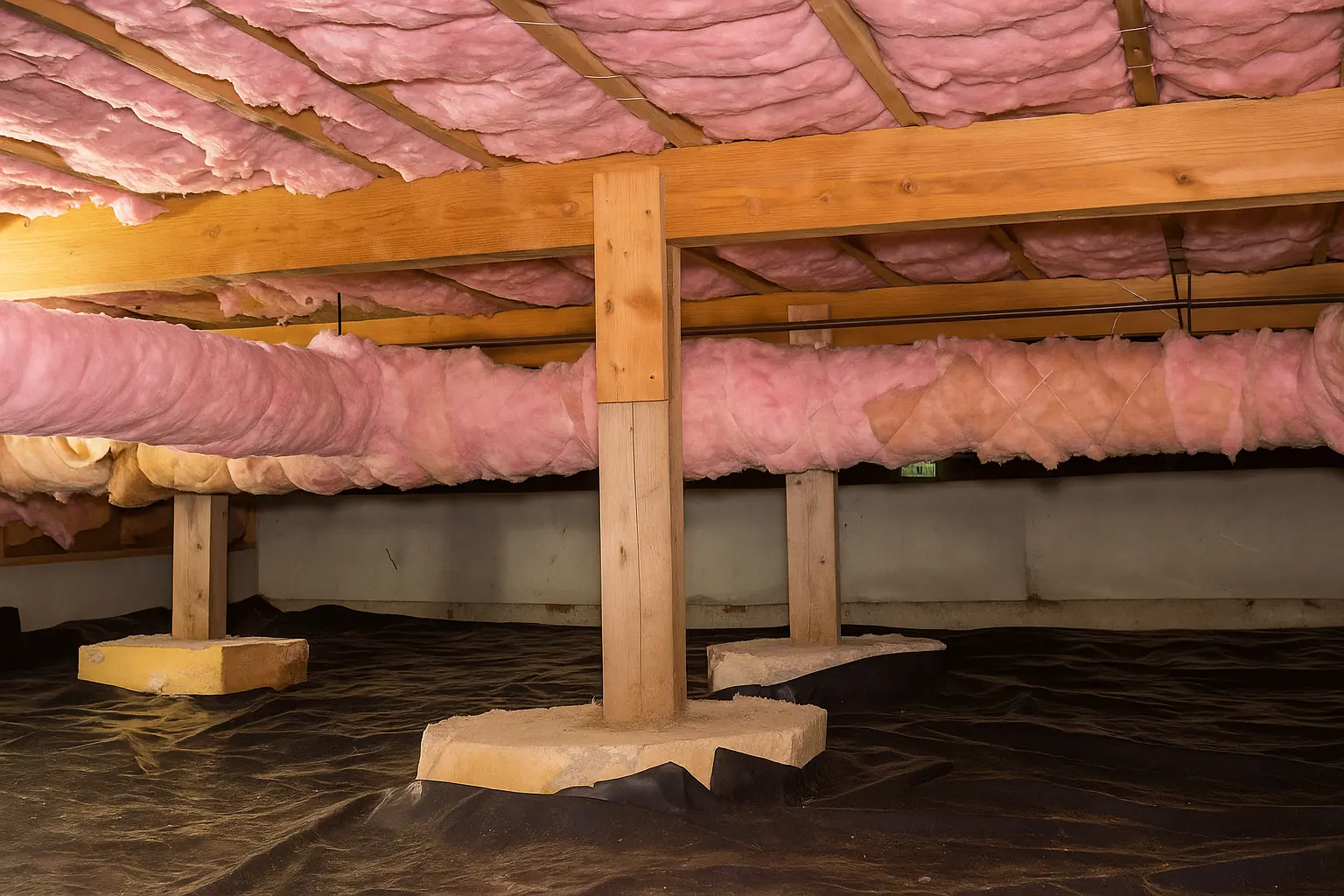
Vented crawl space → insulate the subfloor. Your foundation vents stay open, outside air moves freely underneath, and the insulation goes up between the floor joists. The insulated boundary is your floor.
Unvented or encapsulated crawl space → insulate the walls. The vents are sealed, the crawl space becomes semi-conditioned space connected to your house, and insulation goes on the perimeter walls. The insulated boundary is the foundation.
Doing both is usually wasted money. Insulating the walls of a vented crawl space accomplishes almost nothing, because outside air flows straight past it through the vents.
What this means for Central Valley homes
Most homes in Modesto, Stockton, Turlock, Manteca, and Lodi have vented crawl spaces, and in this climate they work well. Hot, dry summers with very low humidity mean ventilation dries the space out rather than pumping moisture into it.
So for the large majority of Valley homes, subfloor insulation is the right call — and it is the cheaper of the two options.
If a contractor proposes sealing your vents and insulating the walls, ask what specific condition justifies converting your crawl space. Standing water, a documented high water table, or persistent measured humidity are legitimate answers. Preference is not. Our crawl space vapor barrier guide covers that decision in more depth.
Why Most Crawl Space Insulation Fails
Walk under a California home with insulation installed 15 years ago and you will usually find some of it on the ground. There are three reasons, and all of them are installation errors rather than material failures.
1. Nothing holding it up
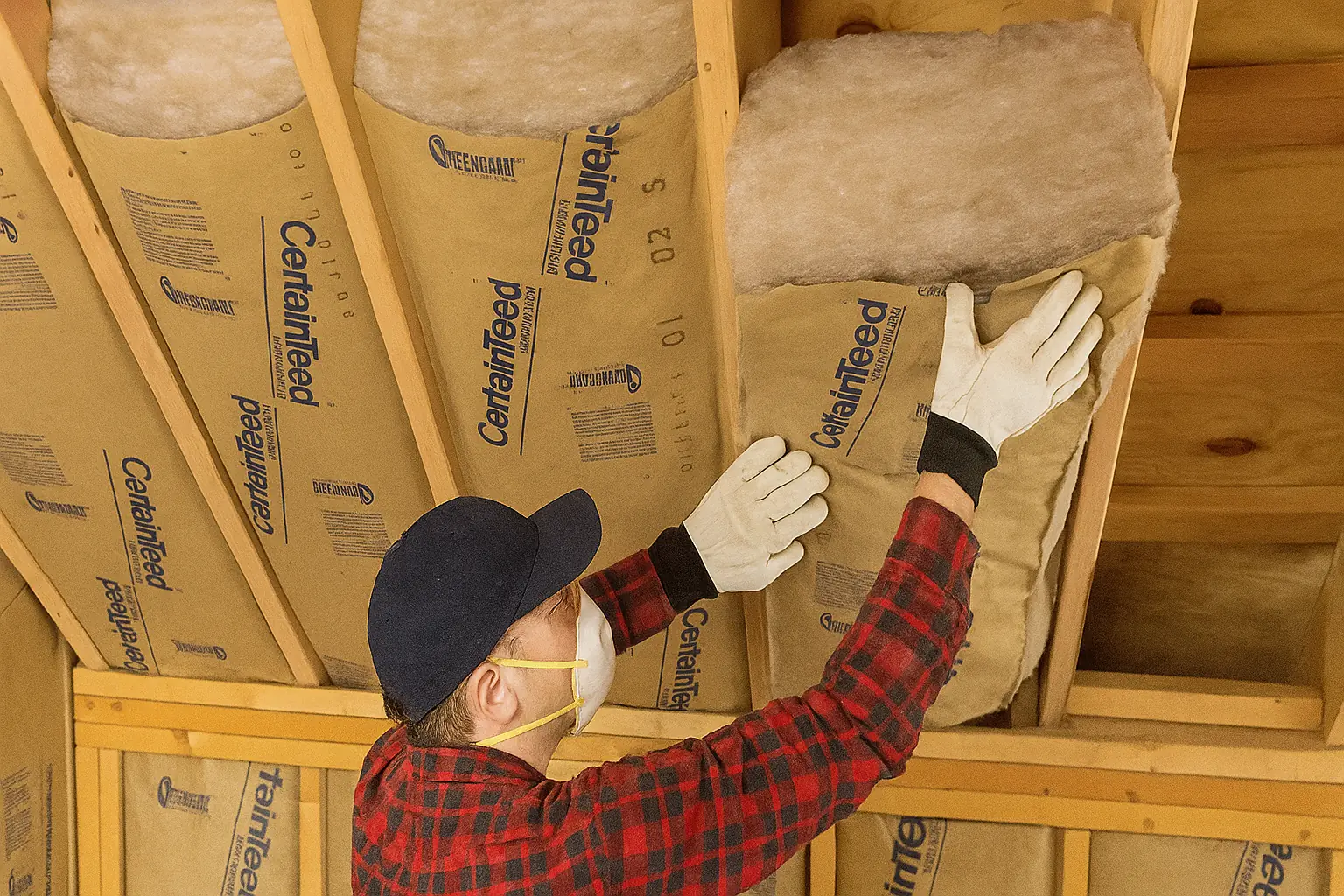
Fiberglass batts wedged between joists will eventually fall. Gravity wins. Proper installation uses support wires, mesh, or strapping every 12 to 18 inches. Skipping supports makes a job faster and cheaper, and it is the most common corner cut in crawl space work.
Once a batt sags even an inch, the air gap behind it destroys most of its performance. Once it falls entirely, you are paying to heat and cool bare subfloor.
2. The facing installed backwards
Faced batts have a kraft paper or foil vapor retarder on one side. In a crawl space, that facing goes up, against the warm side, toward your living space.
Installed facing down, it traps moisture inside the joist bay against your subfloor. That is how you get rot in a space that was supposed to be protected.
3. Insulating over a wet crawl space
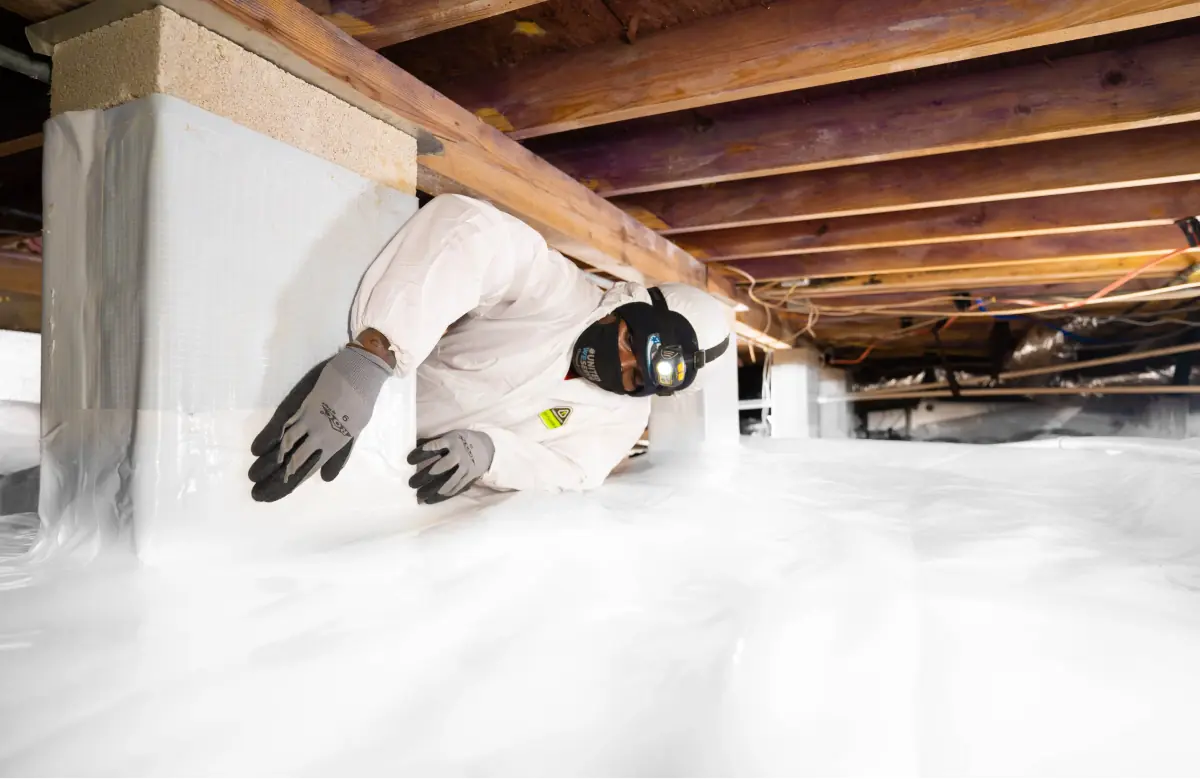
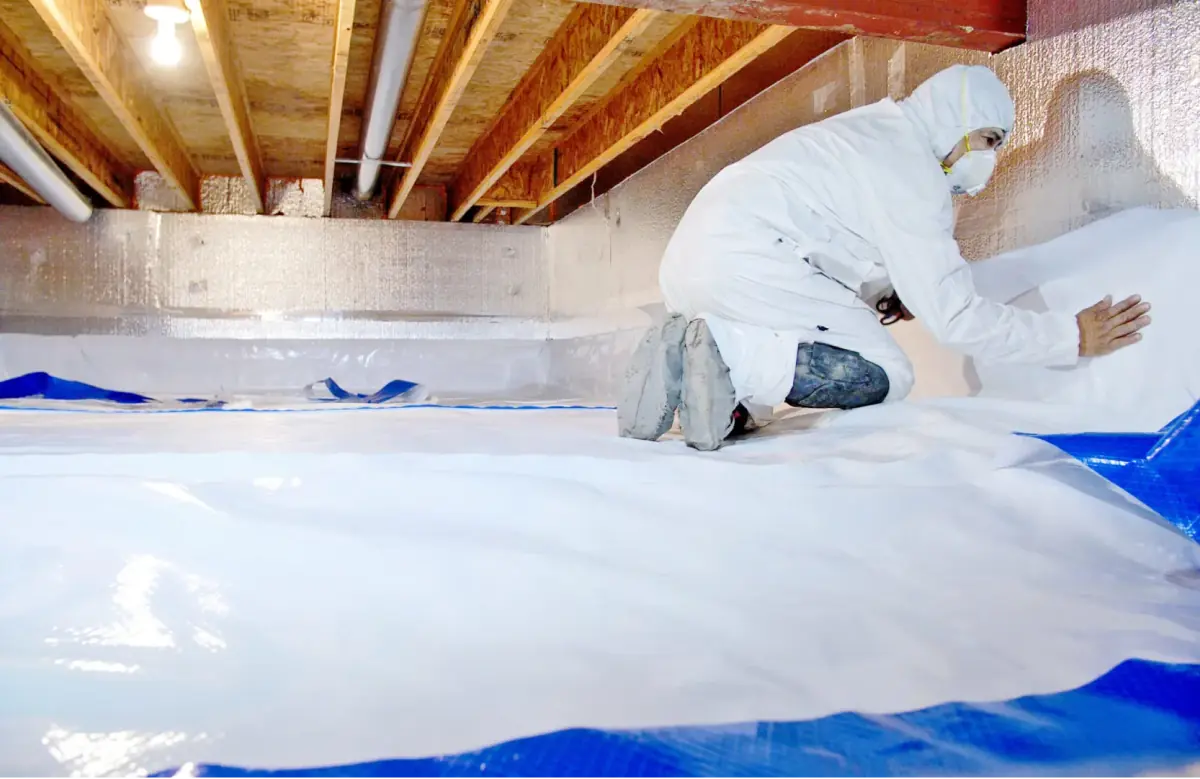
Insulation installed above bare, damp soil absorbs moisture from below, loses R-value, sags, and grows mold. A vapor barrier goes down first, always. Insulating a crawl space with exposed soil is spending money on a component that will fail.
What Drives Your Price Up
Removing old insulation
$1.00 – $2.00 per sq ft
If existing batts are fallen, wet, moldy, or rodent-damaged, they come out before new material goes in. On a 1,500 sq ft crawl space, that is $1,500 to $3,000 added.
Rodent contamination
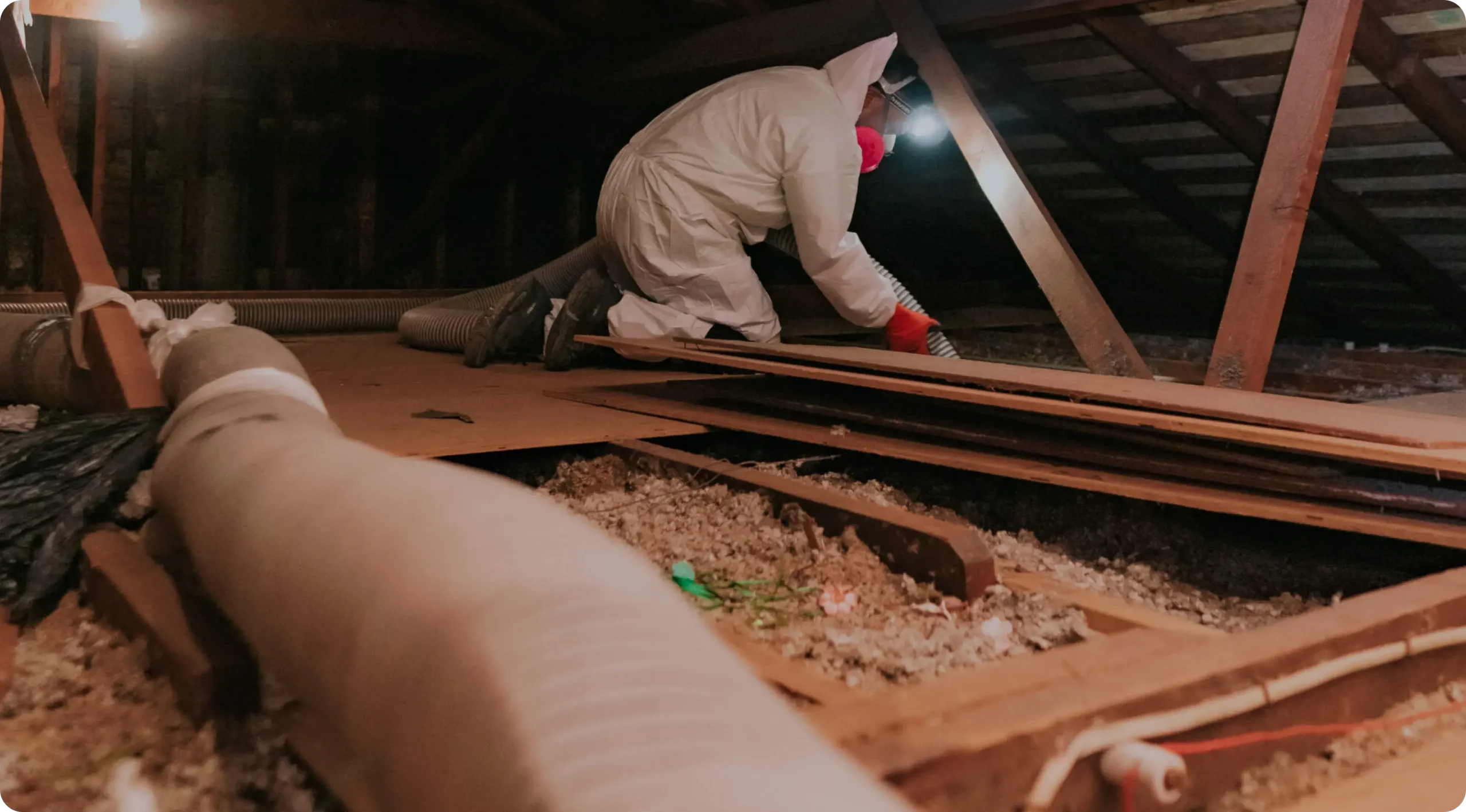
Crawl spaces are the most common rodent entry point in Valley homes, and insulation is their preferred nesting material. Contaminated batts must be removed, the space sanitized, and entry points sealed before new insulation goes in.
Insulating without sealing means the new material gets destroyed the same way the old material did. This is the most common reason a homeowner pays for crawl space insulation twice.
Clearance
An 18-inch crawl space can add $1 to $2 per square foot in labor over a 36-inch one for identical work. Overhead installation while lying on your back is slow.
Ductwork and plumbing
Working around ducts, pipes, and wiring means more cutting, more fitting, and more time.
Rim joist sealing
$300 – $800
The rim joist, where your floor framing meets the foundation, is one of the largest air leakage points in a raised-foundation home. Sealing and insulating it is inexpensive relative to the benefit, and it is frequently left out of quotes. Ask.
How Much Insulation Does California Require?
Title 24, California’s energy code, sets minimum R-values for raised floors by climate zone. R-19 is the common target for raised floors in most of the state, with variation by zone and compliance path.
Practically, R-19 fiberglass fills a standard 2×8 joist bay, and R-30 fits a 2×10. Your joist depth often determines what is achievable without furring the bays out.
Because the requirement depends on your climate zone, your permit date, and whether your project uses the prescriptive or performance path, confirm the current figure for your address before ordering material. The California Energy Commission publishes a climate zone lookup tool.
Estimated Cost by City
Subfloor insulation, 1,500 sq ft crawl space, standard clearance, no removal:
| City | Estimated Range |
| Modesto | $1,800 – $3,800 |
| Stockton | $1,800 – $3,900 |
| Turlock | $1,700 – $3,700 |
| Manteca | $1,800 – $3,800 |
| Lodi | $1,800 – $3,900 |
| Tracy | $1,900 – $4,100 |
| Morada | $1,800 – $3,900 |
| Sacramento | $2,000 – $4,400 |
Clearance and existing conditions move the number more than location does.
Is It Worth It?
For a raised-foundation home with little or no floor insulation, this is one of the more noticeable upgrades available, and the reason is comfort rather than the utility bill.
An uninsulated floor over a vented crawl space sits at roughly outdoor temperature. During Central Valley winters, with tule fog holding temperatures in the 40s for weeks, that means genuinely cold floors and a heating system fighting the ground floor continuously. In summer, the effect reverses.
Typical energy savings run 10% to 15% on heating and cooling for a home going from uninsulated to code-level floor insulation. On a $2,600 project, payback usually lands in the six-to-ten-year range.
The floors stop being cold immediately, though, and that is what people actually notice in January.
On rebates: the federal 25C tax credit expired for anything placed in service after December 31, 2025, so it does not apply to 2026 projects. Some California utility programs still offer floor insulation incentives, and income-qualified households may qualify for substantial weatherization coverage. Program terms change without notice, so verify current offerings directly before counting on a dollar amount.
What a Good Quote Includes
- Subfloor or walls, and the reasoning behind it
- R-value, stated as a number
- Support method, wire, mesh, or strapping, and the spacing
- Facing orientation, confirmed as facing up toward the living space
- Vapor barrier status, whether one exists and whether it is included
- Removal, included or quoted separately
- Rim joist treatment, included or excluded
- Square footage the price is based on
- Warranty on labor and material
- License number, verifiable on the CSLB website
If a quote does not mention how the insulation will be held up, that is the question to ask first.
Frequently Asked Questions
How long does the job take? Most Central Valley crawl spaces are completed in one day. Removal of old insulation or rodent remediation adds a day.
Should I use faced or unfaced batts? In a vented crawl space, faced batts with the facing toward the living space are standard. Unfaced is used where a separate vapor retarder is already in place. What matters most is that the facing is not installed pointing down.
Can I insulate the crawl space myself? Materials are inexpensive, so the savings look attractive. The difficulty is overhead work in a tight, dark space, and the failure modes are unforgiving: sagging batts, backwards facing, and gaps at the rim joist. Most DIY jobs we encounter have at least one.
Do I need a vapor barrier first? If your crawl space has exposed soil, yes. Insulating over bare dirt shortens the life of the insulation considerably.
Will this help with cold floors? It is the most direct fix available. Cold floors over a vented crawl space are almost always an insulation problem.
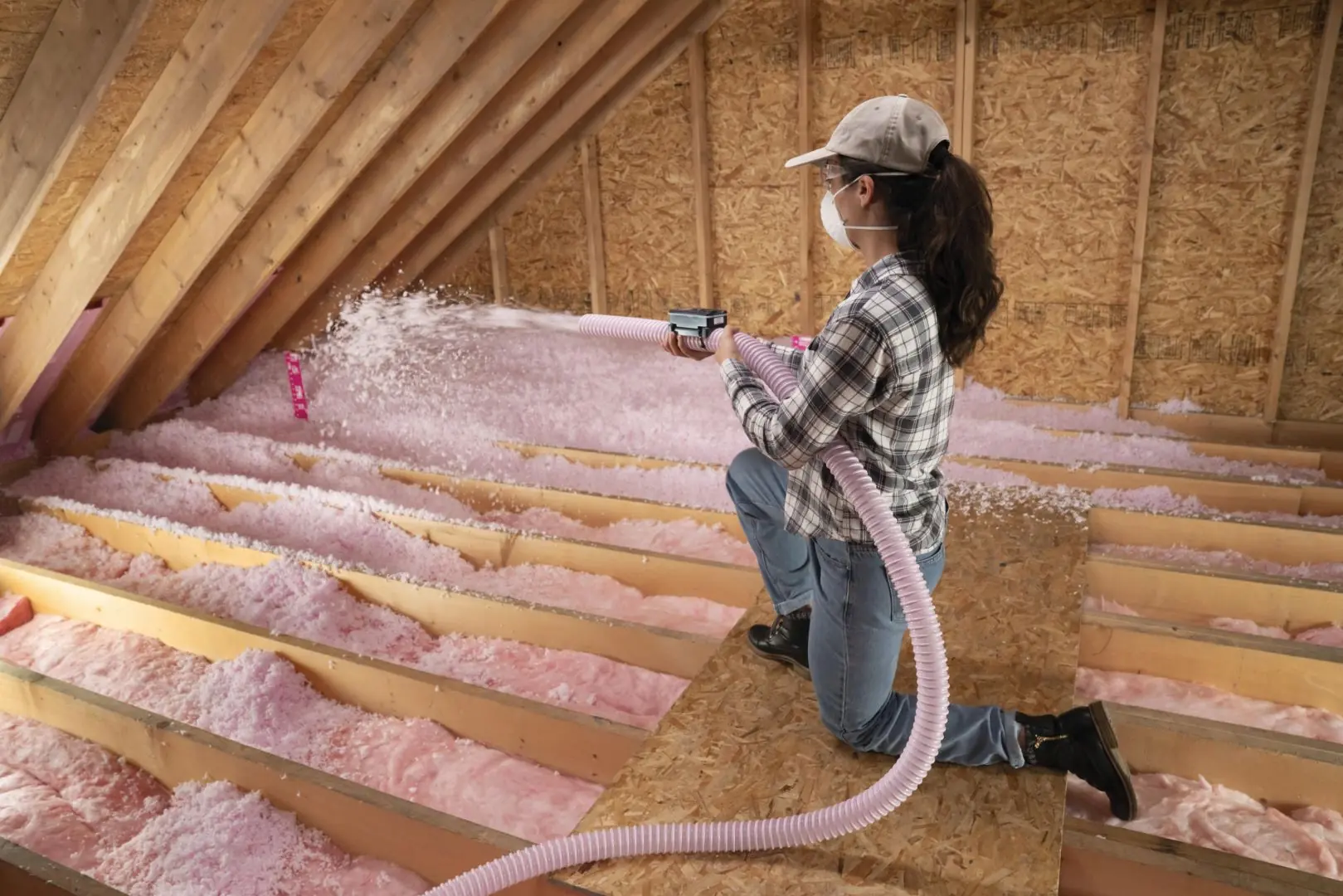
What about spray foam? Closed-cell spray foam insulates and air seals in one step and will not sag. It costs roughly double batts. It makes sense for irregular framing, persistent air leakage, or crawl spaces where batts have already failed once.
Get an Accurate Quote
The right approach depends on whether your crawl space is vented, what clearance you have, what condition the existing insulation is in, and whether there is a vapor barrier down. That takes an inspection.
CA Attic Solutions has served the Central Valley and Northern California for over a decade. Free, no-obligation estimates across Modesto, Stockton, Turlock, Manteca, Lodi, Tracy, and surrounding communities.
Get your free crawl space estimate
Related services: Crawl Space Insulation · Crawl Space Insulation in Manteca · Crawl Space Insulation in Tracy · Crawl Space Insulation in Turlock · Crawl Space Cleanup · Vapor Barrier Installation · Rodent Proofing