Most California homeowners spend $1,600 to $4,000 on crawl space vapor barrier installation in 2026. A small, clean, accessible crawl space can come in near $900. A large one that needs debris removal and rodent cleanup first can pass $6,000.
Then there is the other number you will run into: $8,000, $12,000, sometimes more. That is not vapor barrier pricing. That is full crawl space encapsulation, and it is a different product being quoted against the same question.
Understanding that difference is worth thousands of dollars, and it is where most homeowners get lost. So let’s start there.
Vapor Barrier vs. Encapsulation: Not the Same Job
These terms get used interchangeably online, including by contractors. They are not interchangeable.
| Vapor Barrier | Full Encapsulation | |
| What it is | Sheeting over the soil floor | Sealed system: floor, walls, vents, humidity control |
| Foundation vents | Left open | Sealed shut |
| Dehumidifier | No | Usually yes |
| Wall coverage | Runs up stem wall a few inches | Full wall coverage |
| Typical cost | $1 – $3 per sq ft | $4 – $8 per sq ft |
| 1,500 sq ft crawl space | $1,600 – $4,000 | $6,000 – $12,000 |
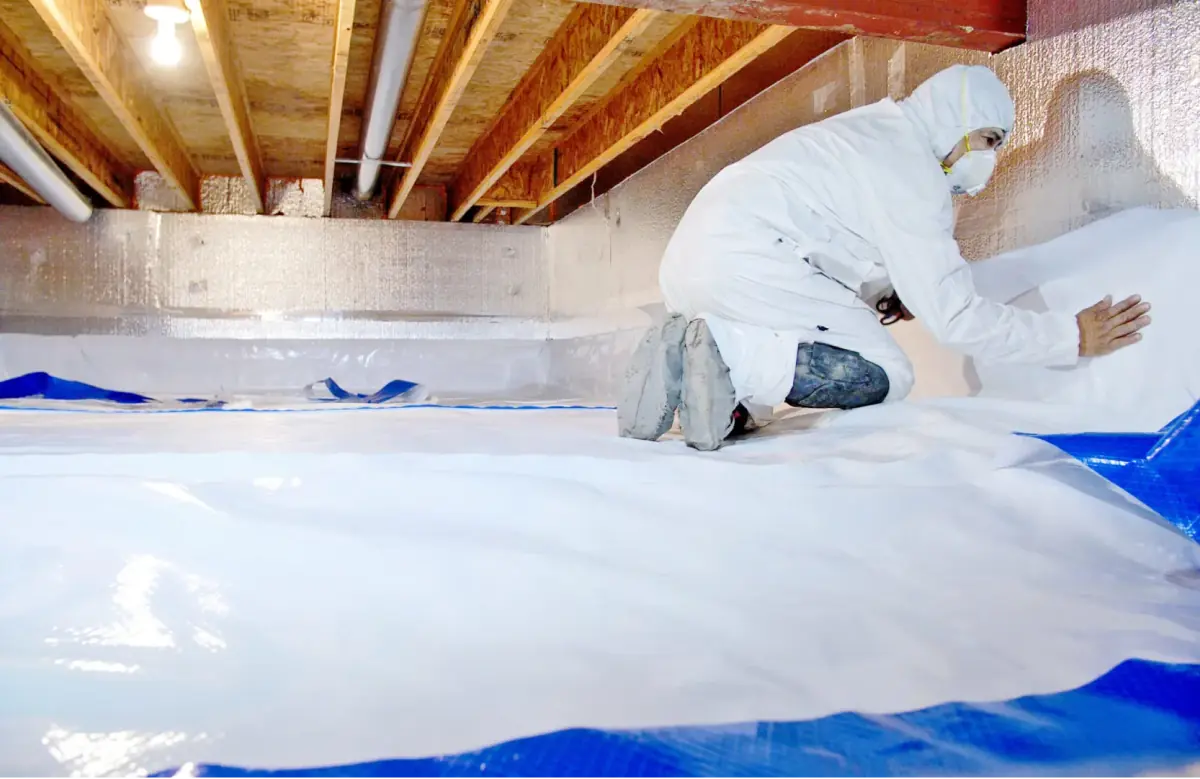
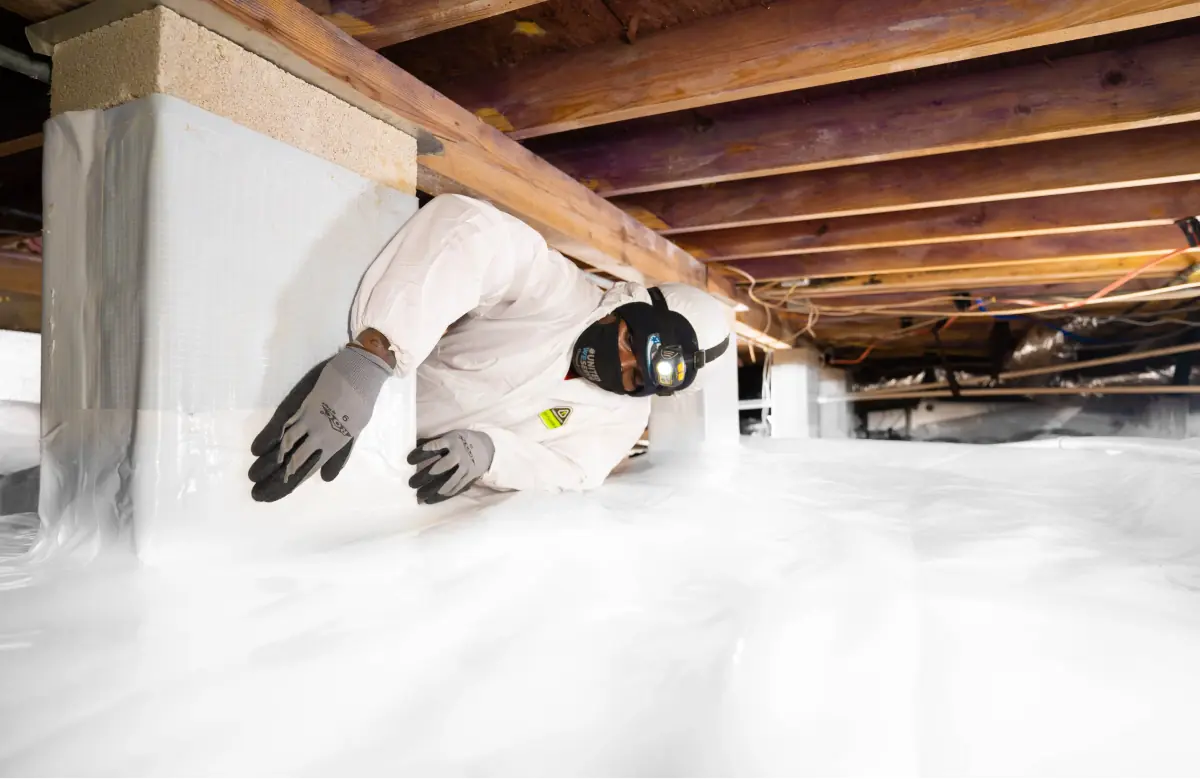
A vapor barrier blocks moisture rising out of the soil. That is the single largest source of crawl space humidity in most California homes, and for many of them, solving it is enough.
Encapsulation is a whole system that closes the crawl space off from outside air entirely and manages humidity mechanically. It is a genuinely better solution in the right conditions. It is also three to four times the price.
Here is the part specific to California: most encapsulation content online is written by contractors in Florida, the Carolinas, and the Gulf Coast, where summer air is more humid than the crawl space itself. In those climates, sealing vents and running a dehumidifier makes clear sense.
The Central Valley is not that climate. Modesto, Stockton, Turlock, and Manteca see hot, dry summers with single-digit relative humidity for months. Ventilated crawl spaces work well here. In most Valley homes, a properly installed vapor barrier over the soil handles the actual problem, and the dehumidifier solves a problem you do not have.
If you are being quoted full encapsulation, ask what specific condition in your crawl space requires it. There are legitimate answers — standing water, a high water table, persistent measured humidity, a crawl space with ductwork and existing mold. “It’s the better option” is not one of them.
Vapor Barrier Cost by Crawl Space Size
Standard reinforced barrier, properly lapped and sealed, over a clean and accessible crawl space:
| Crawl Space Size | Typical Installed Cost |
| 800 sq ft | $900 – $2,200 |
| 1,000 sq ft | $1,100 – $2,800 |
| 1,500 sq ft | $1,600 – $4,000 |
| 2,000 sq ft | $2,100 – $5,200 |
| 2,500 sq ft | $2,600 – $6,500 |
Your crawl space square footage is roughly your home’s ground-floor footprint.
Cost by Barrier Thickness
| Material | Installed Cost per Sq Ft | Notes |
| 6-mil polyethylene | $1.00 – $2.00 | Code minimum, tears easily |
| 10–12 mil reinforced | $1.50 – $3.00 | The practical standard |
| 20 mil reinforced | $2.50 – $4.00 | Heavy traffic, storage use |
Thickness is where the cheapest quotes usually cut. Six-mil poly meets code, but it punctures under a knee or a tool, and in a crawl space anyone will ever need to enter again — for plumbing, electrical, or pest work — those punctures happen.
Reinforced 10 to 12 mil is what holds up in a real California crawl space. The material cost difference on a 1,500 sq ft job is a few hundred dollars. The labor to redo a torn barrier is not.
What California Code Actually Requires
The 2022 California Residential Code sets the baseline, and it is more specific than most homeowners realize:
- Unvented crawl spaces require a Class I vapor retarder
- Joints must overlap at least 6 inches and be sealed
- The barrier must extend at least 6 inches up the stem wall, attached and sealed
- Unvented spaces additionally require mechanical ventilation or a conditioned air supply
- Vented spaces require 1 square foot of vent area per 150 square feet of crawl space with exposed earth
Local jurisdictions can add requirements on top of this. Some require 12-inch overlaps in radon areas. Some specify attachment methods. Permit requirements vary by city.
That 6-inch stem wall detail is the one most commonly skipped, and it is exactly what a home inspector flags during a sale. A barrier laid flat on the dirt with no wall attachment is not a compliant installation, no matter how new the plastic looks.
What Drives Your Price Up
Cleanout before installation
$300 – $900
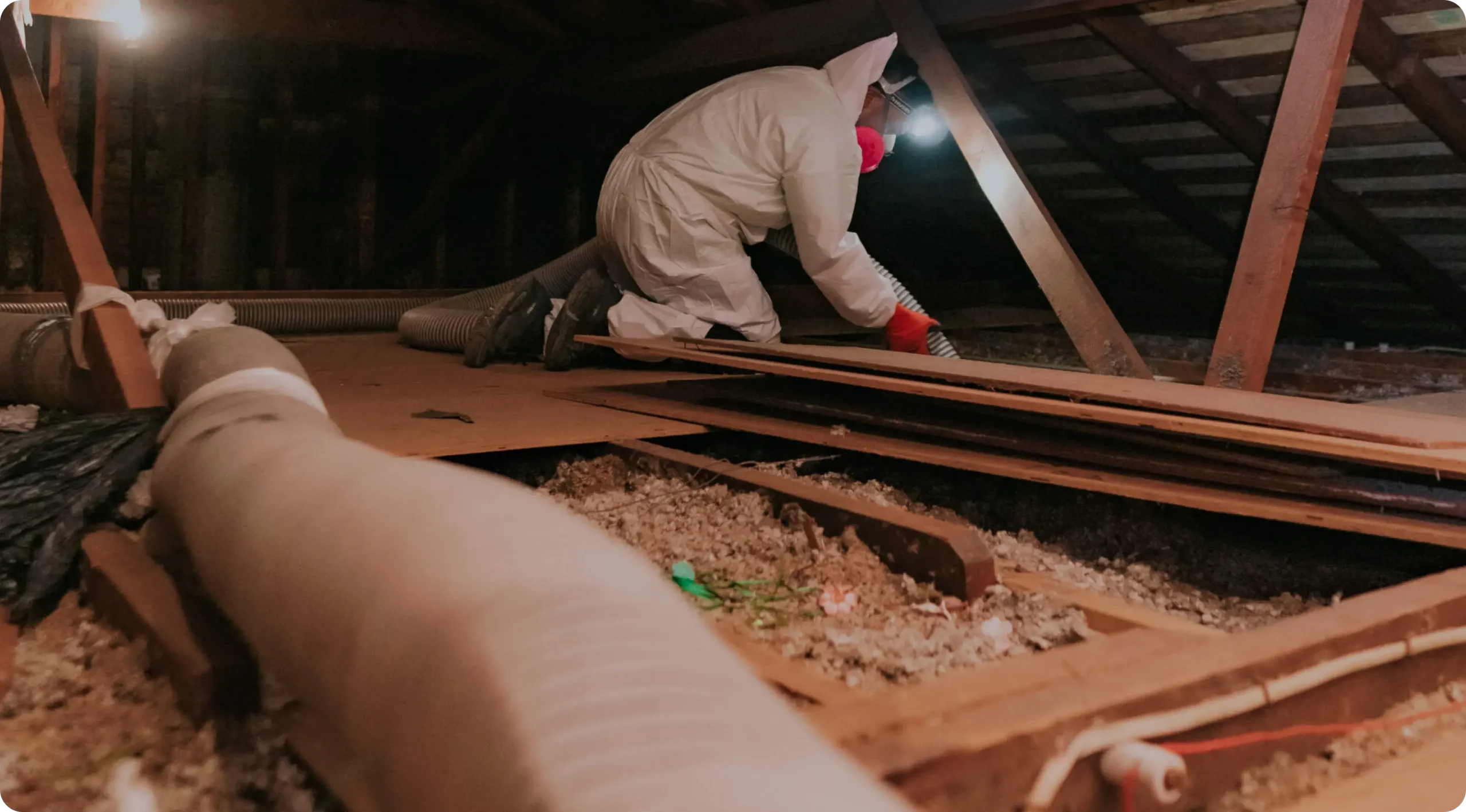
Old torn plastic, construction debris, and decades of accumulated junk have to come out before new sheeting goes down. Nearly every older Central Valley home needs some version of this.
Rodent contamination
$600 – $1,800
Crawl spaces are the most common rodent entry point in Valley homes, and droppings and nesting material must be removed and the area sanitized before a barrier is installed. Sealing contaminated soil under new plastic traps the problem rather than solving it.
If rodents got in, they will get back in. The correct sequence is cleanout, sanitizing, sealing entry points, then the barrier. Doing the barrier alone means doing it twice.
Clearance and access
A 36-inch crawl space is workable. An 18-inch crawl space doubles labor hours for identical square footage. Tight access hatches, interior-only entry, and ductwork running low all slow the job down.
Standing water or drainage problems
$1,500 – $5,000+
A vapor barrier stops soil vapor. It does not stop liquid water. If water pools in your crawl space after winter rains, that needs a drainage solution or sump pump first. Installing a barrier over standing water traps it.
Damaged insulation overhead
If subfloor insulation is falling down, wet, or rodent-damaged, it is far cheaper to address it during the same visit than to mobilize a crew twice. See crawl space insulation.
Estimated Cost by City
Ballpark ranges for a 1,500 sq ft crawl space, reinforced barrier, clean install:
| City | Estimated Range |
| Modesto | $1,600 – $3,800 |
| Stockton | $1,600 – $3,900 |
| Turlock | $1,500 – $3,700 |
| Manteca | $1,600 – $3,800 |
| Lodi | $1,600 – $3,900 |
| Tracy | $1,700 – $4,100 |
| Morada | $1,600 – $3,900 |
| Sacramento | $1,800 – $4,300 |
The bigger variable is crawl space condition, not location. A clean 1970s Turlock crawl space with 36 inches of clearance costs less than a debris-filled 1940s Stockton crawl space of identical size.
Why It Matters in the Central Valley
It is tempting to assume that hot, dry summers mean crawl space moisture is a coastal problem. It is not, for three reasons specific to this region.
Irrigation. The Valley is farmland, and residential landscaping follows suit. Regular irrigation next to a foundation keeps soil moisture high year-round regardless of rainfall.
Winter tule fog. From November through February, the Valley sits under some of the densest, most persistent fog in the country. Humidity stays elevated for weeks, and crawl spaces do not dry out.
Shallow water tables. Parts of San Joaquin and Stanislaus counties have seasonally high groundwater. Soil vapor moves upward continuously in those areas.
What that moisture does over time: wood rot in floor joists and subfloor, mold growth under living space, insulation that sags and loses R-value once damp, wood-destroying pest attraction, and musty air pulled up into the house through the stack effect. Roughly a third of the air you breathe on your ground floor came up from the crawl space.
How to Read a Vapor Barrier Quote
Ask for all of these in writing:
- Barrier thickness in mils. “Heavy-duty plastic” is not a specification.
- Seam overlap and sealing method. Code minimum is 6 inches, sealed.
- Stem wall coverage. How far up, and how it is attached.
- Whether cleanout is included, and what happens if contamination is found.
- Vent handling. Vents staying open, or being sealed? If sealed, what handles humidity?
- Square footage the price is based on.
- Warranty on labor and material.
- License number. Verify it on the CSLB website.
Two things worth pushing back on: a quote produced without anyone entering the crawl space, and full encapsulation recommended without a specific documented moisture reading or water problem.
Frequently Asked Questions
How long does installation take? Most Central Valley crawl spaces are done in one day. Add a day if cleanout or rodent remediation is needed first.
Do I need to seal my foundation vents? In most Central Valley homes, no. Vented crawl spaces perform well in a hot, dry climate. Sealing vents commits you to mechanical humidity control.
How long does a vapor barrier last? A properly installed reinforced barrier lasts 20 years or more if undisturbed. Thin 6-mil poly in a crawl space that gets regular traffic can fail in under five.
Can I install one myself? Materials for a 1,500 sq ft crawl space run $100 to $400, so the savings look appealing. The failure points are seam overlap, stem wall attachment, and working around obstructions in an 18-inch space. Most DIY barriers we encounter have gaps at the walls, which is where most of the vapor moves.
Will a vapor barrier lower my energy bills? Modestly. Dry crawl spaces let insulation perform as intended. The larger benefits are structural protection and indoor air quality.
What if there’s mold already? It needs remediation before the barrier goes in. Sealing mold under plastic does not stop it.
Get an Accurate Quote for Your Crawl Space
Ranges help you budget. They do not replace someone measuring your crawl space, checking clearance, and assessing what is actually down there.
CA Attic Solutions has served the Central Valley and Northern California for over a decade, and we will tell you when a basic vapor barrier is enough rather than upselling you a system you do not need. Free, no-obligation estimates across Modesto, Stockton, Turlock, Manteca, Lodi, Tracy, and surrounding communities.
Get your free crawl space estimate
Related services: Vapor Barrier Installation · Vapor Barrier Installation in Tracy · Crawl Space Cleanup · Crawl Space Insulation · Rodent Proofing · Attic Insulation